

How Registering the Overall Look of Your Product Stops Dupes, Look-Alikes, and Label Copycats
Most business owners know they should register their brand name and logo as trademarks. Fewer realize that the overall look and feel of their product or packaging can be protected, too. That protection is called trade dress.
Under U.S. trademark law, trade dress refers to the total visual image of a product or its packaging. This can include the shape of a product, the color combination used on a label, the arrangement of graphic elements, the texture of packaging, or the layout of a retail space. If customers see those visual cues and think of your brand (even before they read the name on the label) you likely have trade dress worth protecting.
Trade dress lives inside the same legal framework as word marks, logos, and slogans and can be registered at the USPTO just like any other trademark. Once registered, it carries the same legal presumptions of validity, nationwide priority, and access to statutory damages and attorneys’ fees that make trademark enforcement practical.
The USPTO and the courts divide trade dress into two broad categories, and the distinction matters because it affects what you need to prove to get a registration.
This covers the way a product is presented to the buyer: the label design, the box, the bottle shape, the color scheme, the arrangement of text and graphics on the container. Packaging trade dress can sometimes be inherently distinctive, meaning the design is so unique that it immediately signals a particular source without needing years of consumer education.
This covers the shape or appearance of the product itself (not the container, but the thing inside it) and can only be protected once the design has acquired distinctiveness through sustained use and consumer recognition.
In practice, most trade dress applications, whether for packaging or product design, will need to show acquired distinctiveness. The USPTO looks at factors like length and exclusivity of use, advertising expenditures, sales volume, consumer surveys, and unsolicited media coverage.
Sometimes the best way to understand trade dress is to see it in action. The table below highlights well-known trade dress registrations and what each one covers.
| Brand | What Is Protected | The Trade Dress | Why It Matters |
| Coca-Cola | The contour of the bottle shape | 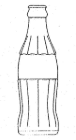 | Recognizable worldwide without any label or logo |
| Tiffany & Co. | The robin’s egg blue box and white ribbon packaging |  | Customers identify the brand by the box alone |
| Christian Louboutin | Lacquered red sole on women’s high-fashion shoes |  | Red sole has become synonymous with the Louboutin brand |
| Hershey’s Kisses | Conical foil-wrapped chocolate shape with paper plume |  | Shape and wrapping are instantly identifiable |
These examples share a common thread: in every case, the visual appearance alone is enough for a consumer to identify the source of the product, even without reading a word of text on the label.
If you already have a word mark and a logo registration, you might wonder whether trade dress is worth the effort. Here is why it often is.
The most dangerous counterfeiters and dupe sellers know how trademark enforcement works. They study your brand, then deliberately copy your label layout, color palette, bottle shape, and graphic style while removing or changing your brand name. They know that without your word mark on the product, a takedown based solely on the word mark is harder to win.
But the customer scrolling through a marketplace listing does not read the fine print first. They see the overall look, the familiar color blocking, the distinctive label shape, the recognizable arrangement of elements, and their brain says “that’s the one I usually buy.” They grab it without noticing that the name is slightly different or missing entirely. That is exactly the kind of consumer confusion trade dress is designed to stop.
A registered trade dress gives you a separate, independent basis to file takedowns and lawsuits against these look-alike products. Even if the infringer has been careful enough to avoid your word mark and your logo, they almost certainly have not avoided your trade dress, because the entire point of their knock-off is to ride on the visual recognition your brand has built.
Social media has turbocharged the market for dupes, products marketed as cheaper alternatives to a recognizable brand. Some dupes are legal, non-infringing alternatives. But many cross the line by copying the overall packaging look so closely that consumers cannot tell the difference at a glance. Trade dress registration gives brands a concrete legal tool to draw that line and enforce it.
As discussed in our earlier blog on trademarks, the most effective anti-counterfeiting strategy layers multiple registrations on the same product. Trade dress is a critical layer because it protects a dimension of your brand that a word mark and a logo simply cannot reach. Each additional registration is another enforcement avenue, and trade dress often covers the one avenue that counterfeiters rely on most heavily: copying the visual impression without copying the name.
A registered trade dress can be enrolled in the same enforcement programs that accept word marks and logos: Amazon Brand Registry, the DHS/CBP e-Recordation program for customs seizures, TikTok Shop IP Protection, eBay VeRO, Walmart Brand Portal, and federal court. The registration gives you standing and a legal presumption of validity in each of these forums.
Trade dress registration is narrower and more demanding than a standard word mark or logo filing. The USPTO requires the applicant to satisfy two core requirements, and failure on either one is fatal to the application.
The design elements you claim as trade dress cannot be functional. If a feature exists because it makes the product work better, cost less, or perform a useful purpose, it is not protectable as trade dress. The idea is that trademark law should not give one company a monopoly on a practical design feature that competitors need to use. This is where trade dress and patent law diverge: patents protect functional innovations for a limited time, while trade dress protects non-functional source identifiers indefinitely.
Example: The contour of the Coca-Cola bottle is protectable trade dress because the shape is decorative and distinctive, not because it makes the bottle easier to grip or pour. A bottle shape that was ergonomically necessary for its function would not qualify.
The applicant must show that consumers associate the trade dress with a specific source (your brand), rather than with the product category in general. The USPTO evaluates this distinctiveness based on factors including how long the trade dress has been used, sales volumes, advertising expenditures, the extent of unsolicited media coverage, and, where available, consumer survey evidence.
Trade dress is narrow in scope. Not every product will qualify, and the evidence bar is higher than for a standard trademark. But for brands that have invested in a distinctive visual identity (a recognizable label layout, a unique bottle shape, a signature color palette, a distinctive product silhouette) trade dress registration is one of the most powerful tools available to stop the dupes and look-alikes that word marks alone cannot reach.
If your competitors or counterfeiters are copying the overall appearance of your product, removing your brand name from the label, and still causing customer confusion, that is exactly the problem trade dress was created to solve.
Ready to explore whether your product qualifies? Contact Buschi IP Law to schedule a consultation. We help founders and consumer brands evaluate, register, and enforce trade dress so the visual identity you built stays yours.
This article is for general informational purposes only and does not constitute legal advice. For advice on your specific situation, please consult a licensed attorney.

© 2026 Busch IP Law
| View Our Disclaimer | Privacy Policy
Law Firm Website Design by The Modern Firm